Español
 العربية
 Pусский
In the realm of mechanical systems, efficiency reigns supreme. Whether it's the smooth operation of an air conditioning unit on a sweltering summer day or the consistent power delivery of an industrial air compressor driving critical manufacturing processes, the ability to achieve the desired output with minimal energy input is paramount. This principle not only translates to significant cost savings over the lifespan of the equipment but also contributes to a reduced environmental footprint. When it comes to compression technology, a notable advancement in efficiency comes in the form of the 2-stage compressor, which generally outperforms its single-stage counterpart in a variety of applications. But what are the fundamental reasons behind this enhanced efficiency? China KITO delves deep into the thermodynamic principles and practical advantages that make 2-stage compressors a more energy-conscious choice, addressing the concerns of users who prioritize performance, cost-effectiveness, and sustainability.
The Inherent Limitations of Single-Stage Compression: A Thermodynamic Hurdle
To truly appreciate the efficiency gains offered by 2-stage compressors, it's crucial to first understand the inherent limitations of compressing air or refrigerant in a single step. In a single-stage compressor, the entire pressure increase required for the application is achieved within a single compression cycle inside one cylinder. While seemingly straightforward, this approach encounters several thermodynamic challenges, particularly when dealing with higher compression ratios – the ratio between the discharge pressure and the suction pressure.
One of the primary limitations is the significant temperature rise that occurs during compression. According to the ideal gas law, as the volume of a gas is reduced under compression, its temperature increases proportionally. In a single-stage compressor striving for a substantial pressure increase, this temperature rise can be considerable. This elevated temperature has a detrimental effect on efficiency because the hotter the gas, the larger its volume. Consequently, the compressor has to expend more energy to further compress this already expanded, heated gas to the target pressure. This represents a direct loss of efficiency as more work is being done to achieve the same pressure output.
Furthermore, the lack of opportunity for intermediate cooling in a single-stage compressor exacerbates this issue. The heat generated during the compression process remains within the system, hindering the efficiency of subsequent compression. This also leads to higher discharge temperatures, which can not only reduce efficiency but also potentially stress the compressor components, such as valves and seals, and even degrade the lubricating oil, impacting the overall reliability and lifespan of the unit. Additionally, the high pressure differential across the single stage can lead to increased leakage past seals and greater energy losses through the intake and discharge valves.
The Two-Step Advantage: How 2-Stage Compression Boosts Efficiency
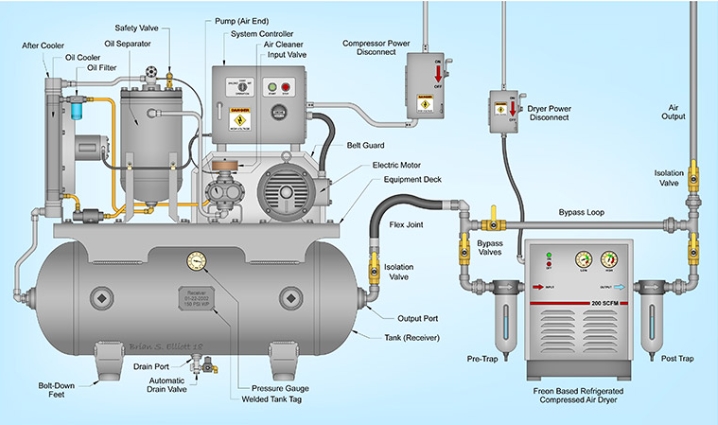
The 2-stage compressor overcomes these limitations by dividing the total compression process into two distinct stages, occurring in separate cylinders, with an intercooler strategically placed between them. This seemingly simple modification yields significant improvements in efficiency through several key mechanisms:
Dividing the Compression Ratio: The fundamental principle behind the efficiency gain is the distribution of the total pressure increase across two smaller compression steps. For instance, if an application requires a total pressure ratio of 9:1, a single-stage compressor handles this entire ratio in one go. In contrast, a 2-stage compressor might achieve a pressure ratio of 3:1 in the first stage and another 3:1 in the second stage (3 x 3 = 9). Compressing in smaller increments is thermodynamically more favorable. The work required for compression is related to the pressure ratio, and by breaking down a large ratio into smaller ones, the overall energy input needed is reduced.
The Crucial Role of Intercooling: The most significant contributor to the enhanced efficiency of a 2-stage compressor is the intercooler. Located between the discharge of the first-stage cylinder and the intake of the second-stage cylinder, the intercooler is a heat exchanger designed to remove the heat generated during the first stage of compression. This cooling process offers several critical benefits:
Reduced Volume: As the compressed gas from the first stage passes through the intercooler, its temperature drops significantly. According to the ideal gas law, a decrease in temperature at constant pressure leads to a reduction in volume. This means that the second stage of the compressor is now tasked with compressing a smaller volume of gas to reach the final pressure, requiring considerably less work. This reduction in the volume of the gas entering the second stage is a primary driver of the efficiency gains observed in 2-stage compressors.
Lower Temperature: The intercooling process also results in a lower temperature of the gas entering the second stage. This, in turn, reduces the overall temperature rise during the entire two-stage compression process. Lower operating temperatures are beneficial for the longevity and reliability of the compressor components and the lubricating oil.
Reduced Work of Compression: Because the gas entering the second stage is cooler and has a smaller volume, the amount of energy required by the second stage to achieve the final desired pressure is significantly less than if it were compressing the hotter, larger volume gas discharged from a single-stage compressor aiming for the same overall pressure ratio.
Improved Density: Cooler gas is denser. By cooling the gas between stages, the second stage intakes a denser charge. This can lead to a higher mass flow rate of compressed air or refrigerant for the same compressor displacement and speed, effectively increasing the output capacity for a given energy input.
Approximating Isothermal Compression: The theoretical ideal for gas compression is isothermal compression, where the gas is compressed at a constant temperature. In practice, achieving perfect isothermal compression is impossible. However, multi-stage compression with intercooling brings the actual compression process closer to this ideal by removing heat between stages. Each stage performs a compression that is closer to isothermal than a single-stage compression achieving the same overall pressure ratio.
Reduced Leakage and Valve Losses: While perhaps less significant than intercooling, the lower pressure ratio across each individual stage in a 2-stage compressor can contribute to reduced leakage past piston rings or the scroll elements in scroll compressors. Similarly, the lower pressure differentials across the intake and discharge valves in each stage can potentially reduce valve losses, leading to improved volumetric efficiency – the ratio of the actual volume of gas delivered to the swept volume of the compressor.
Lower Discharge Temperatures: The cumulative effect of dividing the compression ratio and intercooling results in a significantly lower discharge temperature from the second stage of a 2-stage compressor compared to a single-stage compressor achieving the same final pressure. This lower discharge temperature not only improves efficiency but also enhances the reliability and lifespan of the compressor itself and any downstream equipment or processes that utilize the compressed air or refrigerant.
Why Efficiency Resonates with Users: Beyond the Technical Specifications
The enhanced efficiency of 2-stage compressors translates into tangible benefits that directly address the concerns and priorities of users:
Lower Energy Bills: The most immediate and often the most significant benefit for users is the reduction in energy consumption. Higher efficiency directly equates to lower electricity bills for the same amount of cooling or compressed air delivered. Over the operational life of a compressor, these savings can accumulate to a substantial amount, often offsetting the initial higher purchase cost of a 2-stage unit.
Environmental Responsibility: In an increasingly environmentally conscious world, the lower energy consumption of 2-stage compressors also appeals to users seeking to reduce their carbon footprint. By requiring less electricity, these compressors contribute to a decrease in the demand for power generation, leading to lower greenhouse gas emissions.
Enhanced Comfort (in ACs): For air conditioning applications, the efficiency of a 2-stage compressor enables longer, gentler cooling cycles in the low stage. This results in more consistent and even temperatures throughout the home, eliminating the uncomfortable temperature swings associated with single-stage systems. Furthermore, the extended run times in the low stage significantly improve dehumidification, leading to a more comfortable indoor environment, especially in humid climates.
Improved System Longevity and Reliability: The lower operating temperatures and reduced stress on components in a 2-stage compressor can contribute to increased lifespan and fewer breakdowns compared to single-stage units operating under similar high-pressure demands. This translates to lower maintenance costs and less downtime for users.
Potential for Rebates and Incentives: Recognizing the benefits of energy efficiency, many governments and utility companies offer rebates and incentives for the purchase and installation of high-efficiency appliances and equipment, including 2-stage compressors. This can make the initial investment more financially attractive.
Quieter Operation (Indirectly): While not a direct consequence of the two compression stages themselves, the ability of a 2-stage AC compressor to operate at a lower capacity for extended periods often results in quieter overall operation, a significant concern for many homeowners.
Where 2-Stage Efficiency Shines: Diverse Applications
The efficiency advantages of 2-stage compressors are particularly pronounced in applications requiring moderate to high pressure or significant cooling demands:
Air Conditioning Systems (Residential and Commercial): In both residential and commercial buildings, 2-stage AC systems offer a compelling solution for maintaining consistent comfort and significantly reducing energy consumption, especially in regions with long and hot cooling seasons.
Industrial Air Compressors (Medium to High Pressure): For industrial applications requiring compressed air at pressures beyond the optimal range for single-stage compressors (typically above 100-150 PSI), 2-stage compressors provide substantial energy savings. These applications include powering pneumatic tools in manufacturing plants, operating automated machinery, and various other industrial processes that rely on a consistent and efficient supply of compressed air. Companies like China KITO offer a range of 2-stage air compressors designed for industrial use, emphasizing their efficiency and reliability in demanding environments. Their product lines cater to various pressure and flow requirements, highlighting the practical implementation of 2-stage technology in real-world industrial settings.
Refrigeration Systems (Commercial and Industrial): In commercial and industrial refrigeration systems that require lower temperatures and higher compression ratios, 2-stage compression improves efficiency by reducing the work required to achieve the necessary temperature drop.
Heat Pumps: Multi-stage compression, similar in principle to 2-stage compression, is also employed in heat pumps to enhance their efficiency and performance across a wider range of outdoor temperatures, improving their ability to both heat and cool effectively.
Real-World Factors Influencing Efficiency: Beyond the Design
While the design principles of 2-stage compressors inherently lead to greater efficiency, several real-world factors can influence the actual efficiency achieved in operation:
Design and Quality of Components: The extent of the efficiency gains depends significantly on the quality of the compressor itself, the efficiency of the electric motor driving it, the effectiveness of the intercooler in heat transfer, and the precision of other components like valves and seals. High-quality components and meticulous engineering are crucial for realizing the full potential of 2-stage technology.
Proper Sizing and Application: A 2-stage compressor must be correctly sized to match the specific demands of the application. An oversized unit might cycle too frequently or operate inefficiently at its lower capacity, while an undersized unit will struggle to meet demand and may run continuously at its higher capacity, negating some of the efficiency benefits.
Maintenance: Regular maintenance is essential for maintaining the efficiency of a 2-stage compressor over its lifespan. Dirty condenser or evaporator coils (in ACs), refrigerant leaks, and worn components can all lead to a decrease in efficiency. Routine checks and timely maintenance are crucial for sustained performance.
Operating Conditions: External factors such as ambient temperature and the required operating pressure can also influence the actual efficiency achieved. Compressors operating in very hot environments may experience reduced efficiency due to higher intake temperatures.
A Comparative Glance: 2-Stage vs. Other Technologies
When considering efficiency, it's helpful to briefly compare 2-stage compressors with other compression technologies:
Single-Stage Compressors: As discussed extensively, 2-stage compressors offer clear efficiency advantages over single-stage units, particularly at higher pressure ratios or significant cooling demands, primarily due to the divided compression ratio and intercooling.
Variable Speed Compressors (Inverter Technology): Inverter-driven compressors, which can continuously adjust their speed and capacity, offer an even finer level of control and can achieve even higher efficiencies in some operating scenarios by precisely matching the output to the demand. However, they often come with a higher initial cost and increased complexity compared to 2-stage compressors. Two-stage technology can be seen as a valuable middle ground, offering significant efficiency improvements over single-stage units without the added cost and complexity of some inverter-based systems.
Conclusion: Embracing Efficiency for a Sustainable Future
The efficiency advantages of 2-stage compressors are rooted in sound thermodynamic principles, primarily the division of the compression ratio into smaller steps and the crucial role of intercooling in reducing the temperature and volume of the compressed gas between stages. This leads to tangible benefits for users, including lower energy bills, a reduced environmental impact, enhanced comfort in air conditioning applications, and potentially increased system longevity. While the initial investment for a 2-stage compressor may be higher than that of a single-stage unit, the long-term energy savings and other benefits often make it a more cost-effective and sustainable choice for a wide range of applications requiring moderate to high pressure or significant cooling demands. As industries and individuals continue to prioritize energy conservation and environmental responsibility, the intelligent design and inherent efficiency of 2-stage compressors position them as a vital technology in the pursuit of a more sustainable future.