Español
 العربية
 Pусский
Air compressors are the unsung heroes of countless industries, providing the vital force behind a vast array of tools, machinery, and processes. From the intricate dance of robotic arms on an assembly line to the robust power of a jackhammer breaking concrete, compressed air offers a reliable, versatile, and often indispensable energy source. Within the diverse world of air compression technology, multi-stage compressors stand out for their ability to achieve higher pressures and greater efficiency compared to their single-stage counterparts. Among these advanced systems, two-stage and three-stage compressors represent distinct tiers of performance, each tailored to specific operational demands. Understanding the nuanced differences between these two technologies is crucial for businesses and individuals seeking to optimize their compressed air systems for performance, efficiency, and longevity.
Today, we delve deep into the intricacies of two-stage and three-stage air compressors, moving beyond superficial comparisons to explore their fundamental principles, key distinctions, application landscapes, and the critical considerations that should guide the selection process. We will examine the engineering advantages and trade-offs inherent in each design, providing a thorough understanding of their capabilities and limitations. Furthermore, while our primary focus remains on the technical distinctions, we will also weave in a relevant industry perspective by referencing China KITO, a notable manufacturer in the compressed air sector, to subtly contextualize the global landscape of compressor technology and manufacturing.
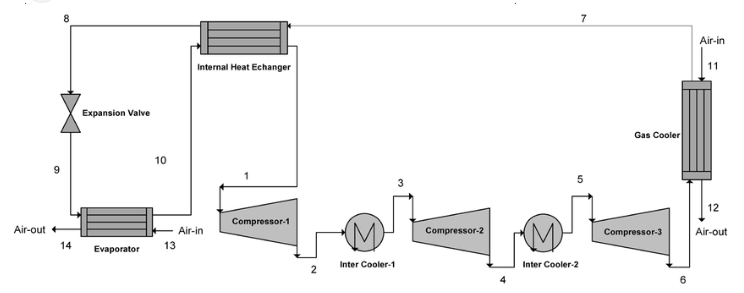
The Foundation: Multi-Stage Compression Explained
The core principle behind multi-stage compression lies in dividing the total work required to compress air to a target pressure into several sequential steps, each occurring in a separate cylinder. This approach offers significant advantages over attempting to achieve the same pressure in a single compression chamber. In a two-stage compressor, the ambient air first enters a larger, low-pressure cylinder where it undergoes initial compression. This partially compressed air is then passed through an intercooler – a vital component that dissipates the heat generated during the first stage of compression. Cooling the air reduces its volume and temperature, making the subsequent compression stage more efficient. The cooled air then enters a smaller, high-pressure cylinder where it is compressed to the final desired pressure.
A three-stage compressor takes this concept a step further by incorporating a third compression cylinder, progressively smaller than the previous two. Air undergoes initial compression in the first stage, is cooled by an intercooler, compressed further in the second stage, cooled again by a second intercooler, and finally reaches its maximum pressure in the third stage. This division of the compression process into three distinct phases, coupled with two intercooling stages, offers even greater control over temperature and pressure build-up.
The inclusion of intercoolers is a hallmark of multi-stage compressors and plays a pivotal role in their enhanced performance. As air is compressed, its temperature naturally increases. This heat not only reduces the efficiency of the compression process (as hotter air occupies a larger volume) but can also lead to increased wear and tear on the compressor components and potentially compromise the quality of the compressed air. Intercoolers, typically finned heat exchangers, effectively remove this heat between compression stages, allowing for denser and cooler air to enter the subsequent cylinder. This results in lower overall operating temperatures, reduced energy consumption for achieving the same final pressure, and improved longevity of the compressor. Additionally, the cooling process in intercoolers facilitates the condensation and removal of moisture from the compressed air, contributing to a drier air supply.
Unpacking the Differences: Two-Stage Compressor vs. Three-Stage Compressor
While both two-stage and three-stage compressors leverage the benefits of multi-stage compression, they exhibit key differences across several critical parameters:
Number of Compression Stages: This is the most fundamental distinction. A two-stage compressor employs two cylinders for sequential compression, while a three-stage compressor utilizes three. This additional stage in the latter directly impacts its performance characteristics.
Pressure Output: Two-stage compressors are designed to achieve moderate to high pressures, typically ranging up to around 175 to 200 pounds per square inch (PSI). They are well-suited for a wide array of industrial and commercial applications requiring pressures within this range. Three-stage compressors, on the other hand, are engineered for significantly higher pressure applications, often exceeding 200 PSI and reaching into the realm of 45 bar (approximately 650 PSI) or even higher in specialized models designed for niche applications like filling high-pressure gas cylinders, sometimes reaching thousands of PSI.
Efficiency: Both two-stage and three-stage compressors offer substantial efficiency gains over single-stage compressors when operating at higher pressures. However, three-stage compressors generally exhibit even greater thermodynamic efficiency at very high pressures. By dividing the compression ratio across three stages with intermediate cooling, the work required per stage is reduced, leading to lower energy consumption for achieving the target pressure. This difference in efficiency becomes more pronounced as the required pressure increases.
Temperature Management: As discussed earlier, intercooling is crucial for managing the heat generated during compression. Three-stage compressors benefit from two intercooling stages, providing more effective heat dissipation compared to the single intercooler in a two-stage unit. This superior temperature management contributes to lower overall operating temperatures, reducing the risk of overheating, extending the lifespan of critical components like valves and seals, and minimizing the degradation of lubricating oil.
Moisture Control: The intercooling process also aids in moisture removal. As the compressed air cools in the intercoolers, water vapor condenses and can be drained. With two intercoolers, three-stage compressors offer more opportunities for moisture separation, resulting in a drier compressed air supply. This can be particularly advantageous in applications sensitive to moisture, such as painting, electronics manufacturing, and certain pneumatic control systems.
Mechanical Complexity: The addition of a third compression stage and a second intercooler inherently makes three-stage compressors more mechanically complex than two-stage units. They involve more cylinders, pistons, connecting rods, valves, and cooling circuits. This increased complexity can translate to a higher initial purchase cost and potentially more intricate maintenance procedures. Two-stage compressors strike a balance, offering enhanced performance over single-stage designs without the full mechanical complexity of three-stage systems.
Maintenance Requirements: Due to their greater mechanical complexity, three-stage compressors may have more potential points of failure and could necessitate more frequent or specialized maintenance. However, the lower operating temperatures in three-stage compressors can also contribute to a longer lifespan for certain components, potentially offsetting some of the increased maintenance demands in the long run. The specific maintenance needs will also depend on the quality of the compressor and the operating conditions. Manufacturers like China KITO often emphasize the durability and maintainability of their multi-stage compressor lines, highlighting features designed to simplify servicing and extend operational life.
Cost: The initial investment for a three-stage compressor is typically higher than that for a comparable two-stage model due to the increased number of components and the more sophisticated engineering involved. However, in applications requiring very high pressures and continuous operation, the superior energy efficiency of a three-stage compressor can lead to lower long-term operating costs, potentially offsetting the higher initial investment over the lifespan of the unit.
Size and Weight: Generally, three-stage compressors tend to be larger and heavier than two-stage compressors with similar output capacities due to the additional cylinder, intercooler, and associated components. This can be a factor to consider in installations where space is limited or where portability is a requirement.
Navigating the Application Landscape
The distinct performance characteristics of two-stage and three-stage compressors make them suitable for different sets of applications:
Two-Stage Compressors: Their ability to deliver moderate to high pressures and a good balance of efficiency and complexity makes them a workhorse in a wide range of industrial and commercial settings. Typical applications include:
* General Industrial Manufacturing: Powering pneumatic tools, operating machinery, and supplying air for various processes in assembly lines, metalworking shops, woodworking facilities, and more.
* Automotive Industry: Operating vehicle lifts, paint spray guns, pneumatic wrenches, and other tools in repair shops and supporting manufacturing processes in automotive plants.
* Aerospace Engineering: Providing compressed air for various manufacturing and assembly tasks in the production of aircraft components.
* Food and Beverage Processing: Driving automated packaging equipment, filling machines, and other pneumatic systems in food and beverage production facilities.
* Construction: Powering pneumatic nail guns, drills, impact wrenches, and other tools on construction sites.
* Higher-Demand Commercial Applications: Serving businesses with consistent compressed air needs at pressures exceeding the capabilities of single-stage compressors.
* Base Load Compressors: Often used as reliable and efficient primary air supply units in systems where continuous operation is critical.
Three-Stage Compressors: Designed for demanding applications requiring significantly higher pressures, three-stage compressors are commonly found in:
* High-Pressure Industrial Processes: Supplying compressed air for specialized manufacturing processes that necessitate very high operating pressures.
* Gas Compression: Compressing various industrial gases for storage, transportation, or use in specific chemical or manufacturing processes.
* Oil and Gas Industry: Applications such as deep-well drilling operations, refining processes, and pneumatic conveying systems operating under extreme pressure conditions.
* Chemical Processing: Certain high-pressure chemical reactions and synthesis processes that require precise and elevated pressures.
* Mining and Metalworking: Powering heavy-duty pneumatic equipment and machinery used in mining operations and metal fabrication that demand very high pressure.
* Air Separation Plants: Providing the high-pressure air required for cryogenic separation of atmospheric gases into nitrogen, oxygen, and argon.
* Commercial Shipping: Utilized for starting large marine diesel engines, where reliable high-pressure air is essential, especially in challenging ambient temperature conditions.
* Fire Departments: Filling self-contained breathing apparatus (SCBA) cylinders with high-pressure air for firefighters.
* SCUBA Diving: Filling high-pressure tanks for recreational and professional diving.
* Paintball and PCP Air Rifles: Providing the necessary high-pressure air for these recreational and sporting applications.
* Pressure Testing: Conducting industrial pressure testing of pipelines, vessels, and other equipment that require verification at very high pressures.
Making the Right Choice: Key User Considerations
Selecting the appropriate type of compressor – whether two-stage or three-stage – is a critical decision that can significantly impact operational efficiency, costs, and the overall performance of pneumatic systems. Several key factors should be carefully considered:
Pressure Requirements: The most crucial determinant. A thorough analysis of the pressure demands of all connected tools and processes is essential. Operating a two-stage compressor below its optimal pressure range or attempting to use it for applications requiring pressures beyond its capability will lead to inefficiency and potential damage. Conversely, deploying a more expensive and complex three-stage compressor for applications that can be adequately served by a two-stage unit would be an unnecessary investment.
Air Volume (CFM) Requirements: Determining the total cubic feet per minute (CFM) of compressed air needed to run all equipment simultaneously is equally important. While multi-stage compressors generally offer higher CFM delivery at higher pressures compared to single-stage units of similar horsepower, it's important to select a model that can meet the peak air demand of the system.
Duty Cycle: How frequently and for what duration will the compressor be operating? Multi-stage compressors, particularly three-stage units with their efficient temperature management, are generally better suited for continuous, heavy-duty operation compared to single-stage models. While both two-stage and three-stage compressors can handle demanding duty cycles, the superior thermal management of a three-stage system can be advantageous for prolonged, high-pressure use.
Energy Efficiency and Operating Costs: Evaluate the energy consumption of both two-stage and three-stage models under the anticipated operating conditions. While a three-stage compressor may have a higher initial cost, its superior energy efficiency at high pressures can translate to significant long-term savings on electricity bills, especially in applications with high air demand and continuous operation. A careful cost-benefit analysis considering the total cost of ownership over the compressor's lifespan is recommended.
Air Quality: The required quality of the compressed air is another important consideration. If the application demands oil-free air, specific oil-free multi-stage compressor options should be explored. The enhanced moisture removal capabilities of three-stage compressors due to their dual intercooling stages can also reduce the need for separate downstream air dryers in some applications, contributing to cost savings and system simplification.
Maintenance: Factor in the complexity of maintenance procedures, the availability of spare parts, and the expertise required for servicing both types of compressors. While three-stage compressors may have more intricate maintenance needs due to their increased complexity, manufacturers like China KITO often design their equipment with serviceability in mind, providing comprehensive maintenance manuals and support networks.
Noise and Vibration: Consider the noise and vibration levels produced by both types of compressors, especially if the installation environment is noise-sensitive. While advancements in compressor design have led to quieter models, the inherent mechanics of multi-stage compression can generate significant noise. Noise mitigation measures may need to be considered.
Space and Installation: Evaluate the physical footprint and installation requirements of the chosen compressor. Three-stage compressors, being generally larger and heavier, may require more dedicated floor space and potentially more robust foundation support.
Budget: Consider both the initial capital expenditure and the projected long-term operating and maintenance costs when establishing a budget for the compressed air system.
Future Needs: It is prudent to anticipate any potential future increases in air demand or pressure requirements. Selecting a compressor with some degree of headroom can prevent the need for premature upgrades.
Advantages and Disadvantages Summarized
To provide a concise overview, here's a summary of the key advantages and disadvantages of each type:
Two-Stage Compressors:
Advantages:
Achieve higher pressures and greater efficiency than single-stage compressors.
Lower initial purchase cost compared to three-stage compressors.
Less mechanical complexity than three-stage compressors, potentially leading to simpler maintenance.
Suitable for a wide range of industrial and commercial applications with moderate to high pressure requirements.
Disadvantages:
Lower maximum pressure capabilities compared to three-stage compressors.
Less energy-efficient than three-stage compressors at very high pressures.
Single intercooler offers less effective temperature and moisture management than the dual intercoolers of a three-stage unit.
Three-Stage Compressors:
Advantages:
Achieve the highest pressure capabilities among reciprocating air compressors.
Offer superior energy efficiency compared to two-stage compressors when operating at very high pressures.
Benefit from two intercooling stages, providing excellent temperature management and reduced risk of overheating.
Dual intercoolers enhance moisture removal, leading to a drier compressed air supply.
Can offer longer component life in demanding, high-pressure applications due to lower operating temperatures.
Disadvantages:
Higher initial purchase cost due to increased mechanical complexity and more components.
More complex mechanical design may lead to more intricate maintenance procedures and potentially higher maintenance costs.
Generally larger and heavier than comparable two-stage models, requiring more installation space and potentially more robust foundations.
May be an over-engineered and less cost-effective solution for applications with moderate pressure requirements that can be adequately served by a two-stage compressor.
Conclusion: Tailoring Compression Power to Specific Needs
In the realm of compressed air, the choice between a two-stage and a three-stage compressor is not a matter of one being inherently superior to the other. Rather, it is a decision that hinges critically on the specific demands of the application. Two-stage compressors provide a robust and efficient solution for a broad spectrum of industrial and commercial needs, offering a significant step up in performance from single-stage units without the full complexity and cost of three-stage systems. They represent a sweet spot for applications requiring moderate to high pressures and a balance of efficiency and maintainability.
Three-stage compressors, on the other hand, are the champions of high-pressure applications, delivering unparalleled pressure capabilities and superior energy efficiency in demanding scenarios. Their enhanced temperature and moisture management make them ideal for continuous, high-pressure operations where reliability and air quality are paramount. However, their increased complexity and cost necessitate a careful evaluation of whether the performance benefits justify the investment and potential maintenance considerations.
Ultimately, the optimal choice requires a thorough understanding of the pressure and volume requirements, duty cycle, energy efficiency goals, air quality needs, budget constraints, and long-term operational considerations. Consulting with compressed air system specialists and carefully evaluating the offerings of reputable manufacturers, such as China KITO, can provide valuable insights and guidance in selecting the compressor that best aligns with individual or business needs, ensuring efficient, reliable, and cost-effective compressed air power.