Español
 العربية
 Pусский
Air compressors are indispensable tools across industries, powering everything from nail guns in small workshops to heavy machinery in factories. When choosing between a single stage vs double stage air compressor, the decision can feel overwhelming without a clear understanding of their differences. This article breaks down the mechanics, advantages, applications, and key considerations of both types, helping you decide which suits your needs. We’ll also spotlight Kito, a leading air compressor supplier from China, whose innovative designs and quality manufacturing elevate both single-stage and double-stage options. Let’s dive in.
Introduction to Air Compressors
Air compressors work by converting power into potential energy stored as compressed air. Whether you’re a DIY enthusiast inflating tires or a professional running an auto repair shop, selecting the right compressor ensures efficiency and performance. The debate of single stage vs double stage air compressor hinges on how air is compressed and delivered—each method offers unique benefits depending on your workload.
What is a Single-Stage Air Compressor?
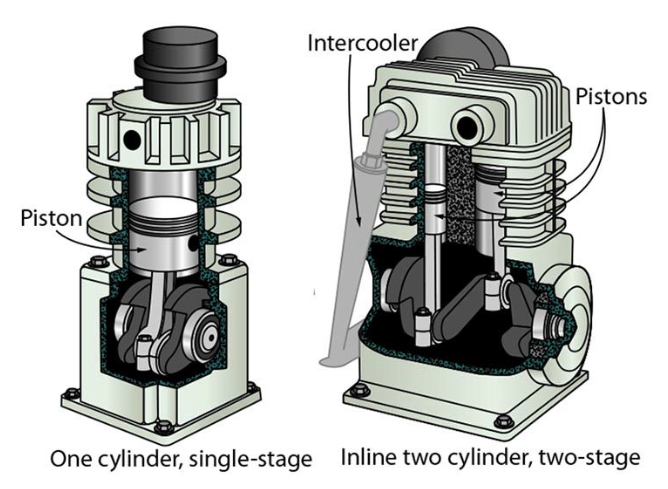
A single-stage air compressor operates with a straightforward process: air is drawn into a cylinder, compressed once by one or more pistons of equal size, and sent to a storage tank. Typically, these machines max out at 120-150 psi (pounds per square inch), making them a popular choice for lighter tasks. Their simplicity translates to affordability and ease of use, a boon for small-scale users.
What is a Double-Stage Air Compressor?
A double-stage air compressor—often called a two-stage compressor—takes things further. Air is compressed twice: first in a larger cylinder, then cooled via an intercooler, and finally compressed again in a smaller cylinder. This dual process achieves pressures up to 175-200 psi, delivering cooler, denser air suited for high-demand applications. While more complex, this design excels in efficiency and durability.
Key Differences Between Single-Stage and Double-Stage Compressors
Understanding the technical distinctions in the single stage vs double stage air compressor debate is crucial for making an informed choice. Here’s how they compare.
Compression Process
Single-Stage: Air undergoes one compression cycle. The piston compresses the air in a single stroke, pushing it directly into the tank. This simplicity generates more heat but keeps the design compact.
Double-Stage: Air is compressed in two steps. After the first compression, it passes through an intercooler to dissipate heat, then gets compressed again. This reduces thermal stress and enhances output quality.
Pressure Output
Single-Stage: Delivers up to 120-150 psi—adequate for tools like spray guns or airbrushes but insufficient for heavy-duty machinery.
Double-Stage: Reaches 175-200 psi, powering industrial tools like sanders, grinders, or multi-tool setups with ease.
Efficiency and Heat Management
Single-Stage: Less efficient at higher pressures, as heat builds up quickly, reducing air density and increasing moisture content.
Double-Stage: More efficient thanks to intercooling, which cools the air between stages. This results in less energy waste and dryer air, ideal for precision work.
Advantages and Disadvantages
Both compressor types have strengths and weaknesses, influencing their suitability in the single stage vs double stage air compressor comparison.
Single-Stage Advantages
Cost-Effective: Single-stage compressors are typically cheaper upfront, making them accessible for hobbyists or small businesses.
Lightweight and Portable: Their compact size and fewer components make them easy to transport—perfect for mobile contractors or home garages.
Simpler Maintenance: With fewer moving parts, repairs and upkeep are straightforward and less costly.
Single-Stage Disadvantages
Limited Pressure: Caps out at 150 psi, restricting its use for high-pressure or continuous tasks.
Higher Heat Output: Without intercooling, the air stays warmer, which can affect performance in humid conditions.
Double-Stage Advantages
Higher Pressure and CFM: Offers greater cubic feet per minute (CFM) and pressure, supporting demanding tools and multi-user setups.
Energy Efficiency: The intercooling process reduces heat-related energy loss, saving power during extended use—especially above 100 psi.
Durability: Built for heavy workloads, these units experience less wear and tear, extending their lifespan.
Double-Stage Disadvantages
Higher Cost: The advanced design and components drive up the initial price, a potential barrier for casual users.
Heavier and Bulkier: Less portable due to their size, they’re better suited for fixed installations.
Applications of Single-Stage and Double-Stage Compressors
The single stage vs double stage air compressor decision largely depends on your intended use. Here’s how they stack up in real-world scenarios.
Single-Stage Applications
DIY and Small Workshops: Perfect for woodworking, tire inflation, or powering light pneumatic tools like nail guns and staplers. Their portability shines in tight spaces.
Intermittent Use: Ideal for tasks that don’t require constant high pressure, such as occasional home repairs or hobby projects.
Double-Stage Applications
Industrial Settings: Excels in automotive shops, manufacturing plants, and construction sites where tools like impact wrenches or plasma cutters demand consistent power.
Continuous Operation: Suited for large teams or high-volume production lines needing uninterrupted air supply.
Why Choose Kito Air Compressors?
When weighing single stage vs double stage air compressor options, the supplier matters as much as the technology. Kito, a senior air compressor manufacturer from China, brings decades of expertise to the table, offering both types with standout features that set them apart.
Kito’s Manufacturing Excellence
Advanced Technology: Kito integrates precision engineering into every unit, ensuring reliability whether you choose single-stage or double-stage. Their compressors are built to withstand rigorous use without compromising performance.
Robust Build Quality: Known for durable materials and craftsmanship, Kito compressors outlast many competitors, reducing replacement costs over time.
Energy-Saving Solutions
Optimized Double-Stage Models: Kito’s two-stage compressors feature enhanced intercooling systems, cutting energy consumption by up to 12% compared to typical single-stage units. This efficiency translates to lower operating costs—a win for industrial users.
PM VSD Innovation: Kito offers Permanent Magnet Variable Speed Drive (PM VSD) technology in its double-stage lineup. This adjusts motor speed to match demand, minimizing energy waste in variable workloads—a feature rare in budget compressors.
Customization and Support
Tailored Options: Whether you need a compact single-stage for a garage or a high-CFM double-stage for a factory, Kito customizes solutions to your exact pressure and airflow requirements.
Global Reliability: As a trusted Chinese supplier, Kito provides worldwide parts availability and expert support, ensuring minimal downtime—a critical advantage for businesses.
Which Compressor Should You Choose?
The single stage vs double stage air compressor choice boils down to your specific needs. Let’s break it down further.
When to Choose Single-Stage
Best For: Light-to-moderate tasks under 120 psi, such as inflating tires, spray painting, or powering small tools.
Why: Their affordability and portability make them a practical pick for DIYers or small-scale operations.
Kito’s Edge: Kito’s single-stage compressors combine lightweight design with rugged durability, offering exceptional value for home workshops or mobile use.
When to Choose Double-Stage
Best For: High-pressure tasks above 150 psi, continuous operation, or industrial-grade applications.
Why: Their power, efficiency, and longevity make them the go-to for professionals needing reliable air delivery.
Kito’s Edge: Kito’s double-stage models, with PM VSD and superior cooling, deliver unmatched performance for factories, auto shops, or large crews.
Practical Considerations for Buyers
Beyond the single stage vs double stage air compressor mechanics, consider these factors:
Budget: Single-stage saves money upfront; double-stage saves on energy long-term.
Space: Single-stage fits tight spaces; double-stage needs room for its bulkier footprint.
Usage Frequency: Occasional use favors single-stage; daily heavy use demands double-stage.
Tool Requirements: Check your tools’ psi and CFM needs—double-stage handles higher demands better.
How Kito Enhances Your Decision
Kito’s reputation as a senior supplier means you’re not just choosing between single-stage and double-stage—you’re investing in quality. Their single-stage units are perfect for cost-conscious users who still want durability, while their double-stage compressors bring industrial-grade power with energy-saving perks. For example, a Kito double-stage with PM VSD could reduce your electricity bill significantly over a standard single-stage model, offsetting the higher initial cost within a year of heavy use.
Conclusion
In the single stage vs double stage air compressor debate, there’s no one-size-fits-all answer. Single-stage compressors shine for their affordability, portability, and simplicity—ideal for DIYers or small workshops needing up to 150 psi. Double-stage compressors, with their higher pressure, efficiency, and durability, dominate in industrial and continuous-use scenarios up to 200 psi. Your choice depends on your budget, workspace, and air demands.