Español
 العربية
 Pусский
The terms "air compressor" and "AC compressor" often dance on the periphery of our understanding, sometimes leading to the assumption of functional overlap due to the shared nomenclature. However, to equate these two vital pieces of machinery is akin to mistaking a power drill for a refrigerator – both serve crucial functions within their respective domains, but their operational principles, working media, and ultimate applications are fundamentally distinct. This detailed exploration aims to dissect the core functionalities, diverse applications, performance characteristics, and other critical aspects of air compressors and AC compressors, illuminating their unique roles and dispelling any notions of interchangeability.
At their most basic, both devices manipulate pressure. An air compressor is a mechanical workhorse designed to compress atmospheric air, thereby increasing its pressure to power a vast array of tools and machinery. Conversely, an AC compressor is the pulsating heart of an air conditioning or refrigeration system, responsible for compressing refrigerant – a specialized fluid – to facilitate the cyclical process of heat transfer that results in cooling. The critical divergence lies not just in what they compress but why they compress it and the subsequent utilization of that compressed medium.
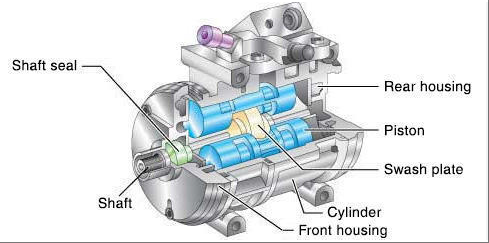
Unraveling the Core Functionality: Power vs. Cooling
The operational narratives of air compressors and AC compressors diverge significantly from the initial intake. An air compressor embarks on a four-stage journey: intake, compression, storage, and delivery. It inhales the ambient air that surrounds it, a gaseous mixture primarily composed of nitrogen and oxygen. This air is then mechanically squeezed, its volume reduced through the action of pistons, screws, vanes, or other ingenious mechanisms. This reduction in volume inevitably leads to a substantial increase in pressure. The now high-pressure air is typically stored in a tank, awaiting its moment to be unleashed through hoses and various tools, providing the motive force for tasks ranging from inflating tires to powering intricate industrial automation.
In stark contrast, the AC compressor operates within a closed, hermetically sealed system, its sole purpose being the circulation and compression of refrigerant. This specialized fluid, carefully chosen for its thermodynamic properties, undergoes a continuous cycle of phase changes. The compressor's role is to take the low-pressure, gaseous refrigerant exiting the evaporator coil (where heat is absorbed from the space being cooled) and compress it into a high-pressure, high-temperature gas. This compression is crucial because it allows the refrigerant to effectively release the absorbed heat in the condenser coil, typically located outdoors. The AC compressor, therefore, is not a generator of power in the same vein as an air compressor; rather, it is the driving force behind the refrigeration cycle, the engine that pumps heat out of a designated space.
The Working Medium: Earth's Breath vs. Engineered Fluid
The fundamental difference in their working media underscores their disparate applications. Air compressors draw upon the readily available atmosphere, a free but often unrefined resource. While convenient, ambient air can contain moisture, dust particles, and other contaminants that can be detrimental to certain applications. Consequently, air compressors often require auxiliary equipment like filters and dryers to ensure the delivery of clean and dry compressed air, particularly in sensitive industries such as pharmaceuticals or electronics manufacturing.
AC compressors, however, rely on meticulously engineered refrigerants. These fluids are selected for their specific boiling points, heat absorption capacities, and chemical stability. They operate within a closed loop, constantly transitioning between liquid and gaseous states to facilitate the transfer of thermal energy. The choice of refrigerant has evolved over time, with a shift towards more environmentally friendly options with lower global warming potential. The integrity of this closed loop is paramount; leaks not only reduce the system's efficiency but also release potentially harmful substances into the atmosphere.
A Tale of Two Applications: Powering the Physical vs. Conditioning the Environment
The applications of air compressors and AC compressors paint a vivid picture of their distinct roles. Air compressors are the unsung heroes powering a vast spectrum of human endeavors. In the industrial realm, they are the lifeblood of pneumatic tools that drive assembly lines, the force behind automated machinery that streamlines production, and the power source for essential processes like spray painting and sandblasting. Even in seemingly unrelated fields like food and beverage packaging and HVAC control systems, compressed air plays a critical role.
The commercial sector also heavily relies on air compressors, from the ubiquitous tire inflators at gas stations and the powerful car lifts in auto repair shops to the specialized equipment in dry cleaning facilities and the precise air tools used in dental surgeries. For the weekend DIY enthusiast, a portable air compressor opens up a world of possibilities, powering nail guns for home renovations and effortlessly inflating tires and sports equipment. Even on a larger scale, mobile air compressors are indispensable on construction sites, powering tools in the absence of readily available electricity, and in the transportation industry, they are crucial for operating the air brakes of trucks and buses.
In contrast, the domain of the AC compressor is centered around environmental control. It is the indispensable core of heating, ventilation, and air conditioning (HVAC) systems that provide comfort in residential, commercial, and industrial buildings. From the window unit in a small apartment to the complex central air conditioning systems of sprawling office complexes, the AC compressor diligently works to remove unwanted heat. Its role extends beyond mere comfort; in industrial settings like data centers and manufacturing plants, precise temperature control maintained by AC compressors is critical for the proper functioning of sensitive equipment and processes.
Furthermore, the AC compressor is the heart of refrigeration systems, ensuring the preservation of food in refrigerators and freezers, maintaining the cold chain for perishable goods during transport, and enabling various industrial cooling processes. Even the air conditioning systems in our cars, buses, and trucks rely on a dedicated AC compressor to provide respite from sweltering conditions.
A Spectrum of Technologies: Diverse Designs for Specific Needs
Both air compressors and AC compressors come in a variety of types, each engineered to meet specific performance requirements and application demands.
Air compressors encompass designs like reciprocating (piston) compressors, the workhorses for smaller, intermittent tasks, known for their durability and the option of oil-lubricated or oil-free operation. Rotary screw compressors offer greater efficiency for continuous operation and larger air demands, boasting lower noise and vibration and a longer lifespan. Centrifugal compressors are behemoths designed for massive industrial applications requiring exceptionally high flow rates. Rotary vane compressors provide a compact and relatively quiet solution for medium-duty tasks, while scroll compressors offer efficiency and reliability with fewer moving parts.
AC compressors, mirroring some air compressor technologies but with adaptations for refrigerant, include reciprocating (piston) types, an older but durable technology. Rotary compressors are compact and lightweight, often found in smaller units. Scroll compressors have become the dominant technology for residential central ACs, striking a balance between efficiency and reliability. Screw compressors are employed in larger commercial and industrial AC systems. A significant advancement in AC technology is the variable-speed (inverter) compressor, which offers remarkable energy efficiency and precise temperature control by adjusting its operating speed based on cooling demand.
Performance Benchmarks: Measuring Output and Efficiency
The performance of air compressors and AC compressors is measured using different metrics that reflect their distinct functions. Air compressor performance is primarily quantified by airflow, measured in cubic feet per minute (CFM) or liters per second (LPS), which indicates the volume of compressed air delivered. Pressure, measured in pounds per square inch (PSI) or bar, signifies the force of the compressed air. Efficiency in air compressors is often a point of concern, as significant energy can be lost as heat during the compression process.
For AC compressors, performance is gauged by cooling capacity, typically measured in British thermal units per hour (BTU/hour) or tons of refrigeration (where one ton equals 12,000 BTU/hour). Energy efficiency is a critical metric, often expressed as the Seasonal Energy Efficiency Ratio (SEER). A higher SEER rating indicates a more energy-efficient unit. The ability of an AC compressor to effectively handle and compress large volumes of refrigerant and generate the necessary pressure differentials is paramount for efficient heat transfer and cooling.
Energy Efficiency: A Growing Imperative
Energy efficiency has become a paramount consideration in the design and selection of both air compressors and AC compressors. Air compressors, by the very nature of compressing a compressible fluid, can be energy-intensive. A significant portion of their lifetime operating cost is often attributed to electricity consumption. Energy losses through heat generation, friction, and leaks can be substantial. However, advancements in design, such as more efficient compression stages and better motor technology, along with diligent maintenance practices like promptly fixing leaks and operating at optimal pressure levels, can yield significant energy savings.
In the realm of AC compressors, energy efficiency is a driving force behind innovation. Regulatory standards and consumer demand have spurred the development of highly efficient units. Variable-speed compressors represent a significant leap forward, offering substantial energy savings by modulating their output to match the cooling load, avoiding the energy waste associated with traditional on-off cycling. Proper sizing of the AC system to the specific cooling requirements of the space is also crucial for maximizing energy efficiency.
The Decibel Dilemma: Noise Considerations
Operational noise is another factor where air compressors and AC compressors exhibit varying characteristics. Air compressors, particularly older or less sophisticated models, can be quite noisy, potentially exceeding levels that can be harmful with prolonged exposure. Noise dampening technologies, such as acoustic enclosures and vibration isolation mounts, are increasingly being incorporated to mitigate this issue.
AC compressors, while not entirely silent, generally operate at lower noise levels compared to many air compressors. The noise generated by the outdoor condenser unit is typically in the range of 50 to 70 decibels. For indoor units, especially those designed for bedrooms, quieter operation is a key design consideration, with some models operating in the 35-45 decibel range.
The Necessity of Maintenance: Ensuring Longevity and Performance
Regular maintenance is crucial for both air compressors and AC compressors to ensure optimal performance, energy efficiency, and longevity. For air compressors, this includes regularly draining moisture from the tank, checking for and rectifying air and oil leaks, inspecting belts and hoses, performing timely oil changes and filter replacements, and generally keeping the unit clean.
AC compressors require regular attention to air filters, cleaning of evaporator and condenser coils, checking refrigerant levels for leaks, ensuring proper airflow around the outdoor unit, and ideally, annual professional servicing by a qualified HVAC technician. Neglecting maintenance can lead to reduced efficiency, increased energy consumption, and premature failure of both types of compressors.
The Bottom Line: Understanding Cost Implications
The cost considerations for air compressors and AC compressors encompass both the initial purchase price and the ongoing operating expenses. Air compressor costs vary widely depending on size, type, and features. Operating costs are primarily driven by electricity consumption and maintenance.
Similarly, the cost of an AC compressor can vary significantly based on type, size, and brand. Replacement costs can range from several hundred to several thousand dollars, including labor. Long-term costs include electricity bills and regular maintenance. Investing in more energy-efficient models of both types of compressors can lead to substantial savings over their operational lifespan.
Lifespan and Durability: Investing in the Long Haul
The expected lifespan of both air compressors and AC compressors is influenced by factors such as build quality, frequency of use, and the diligence of maintenance. Industrial-grade air compressors, with proper care, can last for decades, while smaller units may have a shorter lifespan. AC compressors typically have a lifespan of 10 to 15 years, but this can be extended with consistent maintenance and appropriate usage.
Environmental Responsibility: Minimizing Our Footprint
Both air compressors and AC compressors have environmental implications. Air compressors contribute indirectly through their electricity consumption. AC compressors have a more direct impact through electricity use and the potential leakage of refrigerants, some of which are potent greenhouse gases. The industry is increasingly focused on developing more energy-efficient technologies and using refrigerants with lower global warming potential to minimize their environmental footprint.
China KITO: A Global Perspective on Industrial Equipment
In the landscape of industrial equipment, companies like China KITO play a significant role in manufacturing and supplying a wide range of machinery, including air compressors and potentially components used in AC systems. While the provided link focuses on lifting equipment, it's indicative of China's growing prominence in the global manufacturing sector, producing diverse industrial solutions. Understanding the capabilities and offerings of such manufacturers provides a broader context to the availability and technological advancements in both air compression and HVAC technologies worldwide. The emphasis on quality and efficiency in global manufacturing trends often translates to improvements in the performance and environmental impact of these critical machines.
Conclusion: Distinct Entities Serving Distinct Needs
In conclusion, while both air compressors and AC compressors are vital pieces of machinery that manipulate pressure, their fundamental functions, the media they work with, and the applications they serve are distinctly different. Air compressors are power providers, harnessing the compressibility of air to drive a vast array of tools and industrial processes. AC compressors, on the other hand, are the core of cooling systems, diligently compressing refrigerant to facilitate the essential process of heat transfer.
Understanding these fundamental differences is crucial for selecting the appropriate technology for a given task. Attempting to substitute one for the other is not only inefficient but can lead to system damage or failure. By appreciating their unique roles, performance characteristics, maintenance requirements, and environmental considerations, users can make informed decisions that ensure optimal performance, energy efficiency, and longevity for their specific needs.