Español
 العربية
 Pусский
In the vast landscape of industrial and commercial operations, the demand for compressed air and gases is ubiquitous. From powering intricate pneumatic tools on assembly lines to driving large-scale processes in chemical plants, compressors are the unsung heroes that provide the necessary force. While the simplicity and cost-effectiveness of single-stage compressors make them suitable for a range of applications, there are critical junctures where the limitations of this design become apparent, necessitating the adoption of a more sophisticated approach: multi-stage compression. This article delves deep into the specific circumstances and fundamental reasons that make compressor multi-staging not just beneficial, but absolutely essential for achieving higher pressures efficiently, managing the inherent heat of compression, and ensuring the reliability and longevity of the equipment. We will explore the thermodynamic principles at play and examine the practical implications across various industries, shedding light on why multi-stage compressors are the indispensable choice for a multitude of demanding applications.
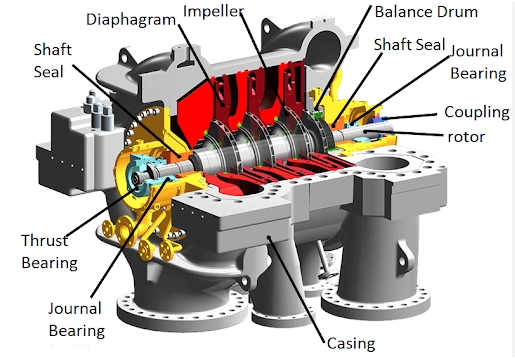
The Breaking Point: Unveiling the Limitations of Single-Stage Compression
At its core, a single-stage compressor attempts to accomplish the entire task of pressure elevation within a single compression cycle, housed within a single cylinder. While this straightforward design serves well for lower pressure requirements, pushing a single-stage compressor to achieve high discharge pressures unveils a cascade of thermodynamic and mechanical challenges that ultimately limit its effectiveness and efficiency.
One of the primary hurdles encountered by single-stage compressors at high pressure ratios – the ratio between the final discharge pressure and the initial suction pressure – is the significant increase in the energy required for compression. The relationship between pressure and volume during compression is non-linear; as the pressure increases substantially in a single step, the energy input needed to further reduce the volume of the gas escalates disproportionately. This inherent thermodynamic inefficiency makes achieving high pressures in a single stage a power-intensive and costly endeavor.
Furthermore, the very act of compressing a gas generates heat. In a single-stage compressor operating at a high compression ratio, this heat buildup can become excessive, leading to alarmingly high discharge temperatures. These elevated temperatures pose a multitude of detrimental effects. Firstly, they can cause the lubricating oil within the compressor to break down, lose its vital viscosity, and fail to adequately protect the moving parts, leading to increased friction and accelerated wear. Secondly, extreme heat can stress the compressor's components, such as valves, seals, and cylinder walls, potentially causing premature failure and costly downtime. Thirdly, in oil-lubricated compressors, excessive temperatures can lead to the formation of carbon deposits, which can interfere with valve operation, reduce efficiency, and even pose a risk of combustion in volatile environments. Safety regulations and material limitations often impose strict upper limits on the allowable discharge temperatures, effectively capping the pressure achievable by a reliable single-stage compressor.
Another significant limitation of single-stage compression at high ratios is the reduction in volumetric efficiency. All reciprocating compressors have a certain amount of clearance volume – the small space remaining in the cylinder when the piston reaches the top of its stroke. At the end of the discharge stroke, this clearance volume is filled with high-pressure gas. During the subsequent intake stroke, this residual high-pressure gas expands. At high overall pressure ratios, this expansion is substantial, occupying a significant portion of the cylinder volume and thus reducing the amount of fresh air or gas that can be drawn into the cylinder for the next compression cycle. This decrease in the volume of fresh fluid intake directly translates to a lower volumetric efficiency, meaning the compressor delivers less compressed fluid for each cycle, diminishing its overall effectiveness.
The Tipping Point: Identifying the Scenarios Demanding Multi-Staging
The aforementioned limitations of single-stage compression highlight the critical junctures where multi-stage compressors become not just a preferable option, but an absolute necessity:
Reaching the Peaks of Pressure: When an application demands significantly elevated discharge pressures, far beyond the practical and efficient capabilities of single-stage units, multi-staging steps in as the indispensable solution. By dividing the total pressure increase into a series of smaller, more manageable increments across multiple cylinders, multi-stage compressors can achieve pressures that would be unattainable or highly inefficient with a single-stage design. For instance, industries like PET bottle manufacturing require air compressed to hundreds or even thousands of PSI to mold plastic. Gas compression for pipeline transport or storage also necessitates extremely high pressures. Similarly, filling scuba tanks and certain specialized industrial processes rely on the high-pressure delivery that only multi-stage compressors can reliably provide.
The Pursuit of Energy Efficiency at Higher Pressures: While single-stage compressors can technically reach higher pressures, the energy cost associated with doing so becomes prohibitively high. Multi-stage compression, coupled with the crucial element of intercooling between stages, offers a significantly more energy-efficient pathway to achieving these elevated pressures. As discussed earlier, compressing a cooler, less voluminous gas in each subsequent stage requires substantially less work. The cumulative effect of these energy savings across multiple stages can translate to significant reductions in operating costs, particularly in applications that require continuous high-pressure operation. For industries with substantial compressed air or gas demands, such as large-scale manufacturing and chemical processing, the energy efficiency gains offered by multi-stage compressors are often the primary driver for their adoption.
Taming the Thermal Beast: Managing Discharge Temperature for Reliability and Safety: The excessive heat generated during high-ratio single-stage compression poses a serious threat to the reliability and safety of the compressor system. Multi-staging, with its inherent intercooling capabilities, provides a vital mechanism for managing these temperatures. By removing the heat of compression after each stage, intercoolers prevent the dangerous buildup of thermal energy that can lead to lubricant breakdown, component damage, and even the risk of fire or explosion in certain environments. This controlled temperature profile ensures the longevity and safe operation of the compressor, particularly in demanding industrial settings.
Boosting Volumetric Efficiency in High-Pressure Regimes: As previously noted, high compression ratios in single-stage compressors lead to a decline in volumetric efficiency. Multi-stage designs counteract this by distributing the overall pressure ratio across multiple stages. This results in a lower pressure ratio within each individual cylinder, minimizing the expansion of residual gas in the clearance volume and allowing for a greater intake of fresh fluid in each cycle. The net effect is a higher volumetric efficiency, meaning the compressor delivers a greater volume of compressed fluid for a given size and speed, improving its overall performance and output capacity at high pressures.
Tailoring Compression for Specific Needs: Certain gases or specialized industrial processes may necessitate multi-stage compression due to the unique properties of the gas being compressed or the specific requirements of the application. For example, in refrigeration systems designed to achieve very low temperatures, cascade refrigeration cycles often employ multi-stage compression using different refrigerants with optimized pressure-temperature characteristics for each stage. Similarly, some chemical processes might require precise control over the temperature and pressure of the compressed gases at various points in the process, making multi-staging the preferred approach.
The Interplay of Cooling: Intercoolers and Aftercoolers in Action
The efficiency and reliability of multi-stage compressors are intrinsically linked to the effective use of intercoolers and aftercoolers.
Intercoolers: The Mid-Process Chill: Intercoolers are heat exchangers strategically positioned between the compression stages of a multi-stage compressor. Their primary function is to remove the heat generated during the compression of the fluid in the preceding stage. This cooling process is crucial for the reasons outlined earlier: reducing the volume and temperature of the fluid before it enters the next stage, thereby decreasing the work required for subsequent compression and bringing the overall process closer to isothermal compression. Intercoolers come in various designs, with air-cooled and water-cooled types being the most common. Air-cooled intercoolers dissipate heat to the ambient air, while water-cooled intercoolers use a circulating water system for more efficient heat removal.
Aftercoolers: The Final Temperature Tamer: Aftercoolers are heat exchangers located after the final compression stage of a multi-stage compressor. Their role is to further cool the compressed fluid before it enters the storage tank or is delivered to the point of use. This final cooling step offers several important benefits. In air compression applications, aftercooling causes moisture vapor in the compressed air to condense into liquid water, which can then be removed by moisture separators, resulting in drier, higher-quality compressed air. Lowering the temperature of the delivered air or gas can also be crucial for temperature-sensitive applications and improves the overall safety and suitability of the compressed fluid for its intended purpose.
User Priorities: Why Multi-Staging Addresses Key Concerns
The necessity of multi-stage compressors is often driven by the core concerns of users across various industries:
The Bottom Line: Minimizing Operating Costs through Energy Savings: In industries with substantial and continuous demands for high-pressure compressed air or gases, energy consumption represents a significant portion of the operating expenses. Multi-stage compressors offer a tangible pathway to significantly reduce these energy costs by compressing more efficiently at higher pressures.
Ensuring Operational Continuity: Equipment Reliability and Longevity: Unexpected compressor failures can lead to costly downtime and production losses. By mitigating the damaging effects of excessive heat and stress on components, multi-stage compressors contribute to increased equipment reliability and a longer operational lifespan.
Meeting Stringent Process Specifications: Many industrial processes, particularly in sectors like chemical processing and pharmaceuticals, have precise requirements for the pressure and temperature of the gases used. Multi-stage compressors provide the necessary control and capabilities to consistently meet these critical specifications.
Boosting Productivity: Reliable Power for Demanding Tools: In manufacturing and construction, the efficiency and power of pneumatic tools directly impact productivity. Multi-stage compressors ensure a consistent and adequate supply of high-pressure air to operate even the most demanding tools effectively.
Quality Assurance: Maintaining Compressed Air Quality: In sensitive applications where the presence of moisture or contaminants in compressed air can compromise product quality or equipment integrity, the temperature management and potential for moisture removal inherent in multi-stage systems are highly valued.
A Glimpse into Application Landscapes: Where Multi-Staging Reigns Supreme
The necessity of multi-stage compressors is evident in their widespread use across a diverse range of industries and applications:
Manufacturing: From automotive assembly lines utilizing high-pressure air for robotic operations and painting to general industrial facilities powering a multitude of pneumatic tools and machinery.
Power Generation: In gas turbine power plants, multi-stage compressors are crucial for compressing intake air to high pressures for efficient combustion.
Chemical and Petrochemical Processing: For compressing various process gases used in chemical reactions, refining, and the production of plastics and other materials.
Oil and Gas Industry: In pipeline transport of natural gas, gas lift operations to enhance oil recovery, and various other high-pressure applications.
Refrigeration and HVAC: Large commercial and industrial refrigeration systems often employ multi-stage compression to achieve the high compression ratios required for low-temperature operation.
Mining and Construction: Powering heavy-duty pneumatic tools like jackhammers and rock drills that demand high pressure and significant airflow.
Food and Beverage Processing: In specific applications such as PET bottle manufacturing and certain high-pressure processing techniques.
Manufacturers like China KITO recognize the critical need for reliable and efficient multi-stage compressors across these diverse sectors. Their product portfolio often includes a comprehensive range of multi-stage air and gas compressors engineered to deliver the high pressures and performance required for demanding industrial applications, emphasizing energy efficiency and durability.
Conclusion: The Indispensable Nature of Staged Compression
In conclusion, the adoption of multi-stage compressors transcends mere preference; it becomes a fundamental necessity when the demands of pressure, efficiency, temperature management, and reliability exceed the inherent capabilities of single-stage designs. Primarily driven by the need to achieve high discharge pressures efficiently and to effectively manage the heat generated during compression, multi-staging offers a suite of compelling advantages that are crucial for a vast array of industrial and commercial applications. While multi-stage compressors may involve a higher initial investment and a more complex design, the long-term benefits of reduced energy consumption, lower operating temperatures, improved volumetric efficiency, and enhanced equipment reliability often outweigh these factors, making them the indispensable choice for powering the high-pressure needs of our modern world. Understanding the limitations of single-stage compression and the compelling advantages offered by multi-staging empowers users to make informed decisions that ensure optimal performance, cost-effectiveness, and the long-term success of their operations.