Español
 العربية
 Pусский
What is a screw air compressor?
The screw compressor operates by capturing air between two interlocking rotors, causing a reduction in the air's volume as it progresses through the rotor assembly. This reduction in volume leads to the generation of compressed air, which can subsequently be applied across a diverse range of applications.
Why use a screw compressor?
Screw air compressors offer energy efficient performance by producing significantly less heat in comparison to conventional air compressors. This reduced heat generation results in a lower amount of water produced during the compression of air, thereby decreasing the risk of moisture entering your compressor, tools, and final applications.
Do screw compressors run constantly?
As the technology of choice across a wide range of applications, screw compressors have a lot to offer customers: Continuous operation Capable of continuous airflow and pressurisation, they don't need to be shut on and off and have no duty cycle.
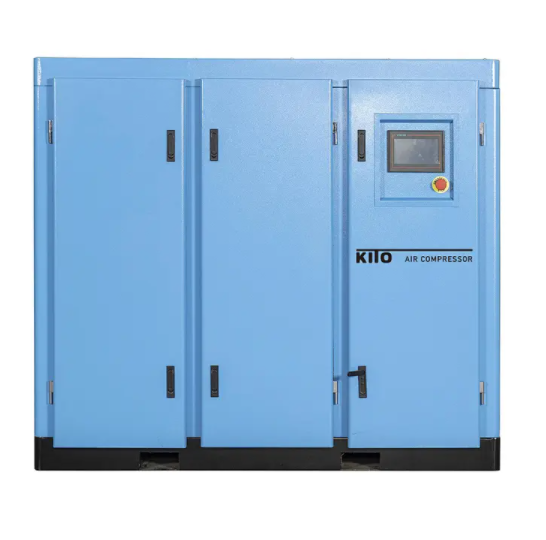
Pros & Cons of screw type compressor
PROS
Rotary screw compressors, often referred to simply as screw compressors, excel in extreme weather conditions, both in high and low temperature ranges. They are also suitable for applications where the use of other chemicals is restricted to prevent potentially hazardous situations.
What sets rotary screw compressors apart from their counterparts is their streamlined design, featuring approximately 70% fewer components. This simplified configuration not only eases maintenance procedures but also leads to reduced maintenance costs.
In terms of noise levels, rotary screw compressors exhibit superior performance compared to other compressors. This is achieved through the incorporation of noise dampening technologies, ensuring a tranquil working environment.
Furthermore, rotary screw compressors generate less heat when compared to alternative compressor types, which contributes to the longevity of the system. They are also known for their efficient oil utilization, ensuring an ample supply for cooling the compression chamber, lubricating moving components, maintaining seals, and dissipating noise.
CONS
One notable drawback associated with rotary screw air compressors is their substantial initial cost, which often leads many businesses to explore alternative options. While the elevated price tag is justified by their efficiency and extended lifespan, securing the necessary funds, particularly during the initial stages, poses a challenge for several companies.
In contrast to typical air compressors, the maintenance of rotary screw compressors cannot be entrusted to standard technicians. It demands a higher level of expertise and comprehension due to the intricate systems and components involved in the maintenance and servicing of rotary screw compressors.
Why are screw type compressors more efficient?
Rotary screw air compressors provide better performance and often require less space, which makes them an attractive alternate option.
Boost Your Productivity
In general, rotary screw air compressors outperform reciprocating compressors of the same size by delivering a higher volume of air. Reciprocating compressors necessitate air receiver tanks to handle increased air demands and to mitigate air pulses generated during the compression process. In contrast, rotary screw compressors operate without generating the same air pulses and can supply substantial amounts of air without requiring a tank. This means you won't have to wait for your compressor to catch up with your work, enabling you to complete tasks more swiftly and potentially tackle more projects in a single day!
Extend Your Work Duration
Rotary screw air compressors operate at a consistent 100% duty cycle, which measures the duration a compressor can continuously run without the need for breaks to prevent overheating within a specified time frame. For instance, if a compressor can operate for 60 minutes within a 60 minute period without interruptions, it operates at a 100% duty cycle. Conversely, compressors with a lower duty cycle, such as 50%, can only run half the time, limiting your work efficiency. Rotary screw compressors run uninterrupted, allowing you to work continuously without disruptions.
Enjoy Peace of Mind
Rotary screw air compressors have a longer lifespan compared to reciprocating air compressors. Similar to an engine, reciprocating compressors contain piston rings and components that experience wear over time. This wear leads to decreased performance, increased oil carryover, and heightened heat generation.
Oil injected rotary screw compressors utilize oil to seal their internal rotors, preventing components from wearing out. Unlike reciprocating compressors that experience performance degradation over time, rotary screw compressors maintain consistent performance throughout their extended lifespan.
Work More Efficiently
Rotary screw air compressors are not only lighter but also offer greater capacity in a more compact package compared to reciprocating air compressors. As a result, vehicles can transport more equipment, tools, and materials while spending less time commuting between workshops and job sites. This increased carrying capacity not only allows you to transport more but also empowers you to accomplish more.
Rotary screw type air compressor provide ample power to operate most handheld pneumatic tools, from impact wrenches and deburring tools to grinders. You'll have a reliable source of compressed air to operate your tools whenever you need them.
When asked why they prefer rotary screw air compressor, industry professionals said it was because of performance, quality/reliability, and size/weight. Meanwhile, the other who preferred reciprocating / piston air compressors choose that option because of ease of service and repair, price, and availability.
Ultimately, if your primary concern is size and weight or job performance from a high-quality system that will last a vehicle’s lifetime, rotary screw air compressors are the way to go. By contrast, if upfront price, ease of repair, and widespread availability are your driving motivators, a reciprocating air compressor may be a better fit for your needs.
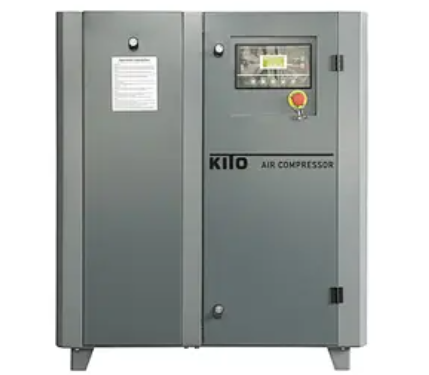
Is Oil Necessary for Screw Compressors?
Certain rotary screw air compressors operate without the need for oil. Nonetheless, such designs often come with higher noise levels and increased costs. Oil free rotary screw air compressors are primarily employed in industrial settings where any risk of oil contamination must be strictly avoided, such as in food processing or medical oxygen production.
ZHEJIANG KITO supplies high cost effective silent air compressor, regarding “ultra quiet “ as destiny optimizing and adjusting the process of production, implementing QC system, and promoting the upgrading and manufacturing of high quality air compressors actively. KITO is looking forward your contact of oil injected rotary screw air compressor variablespeed driven series!