Español
 العربية
 Pусский
What is air compressor?
An air compressor is a mechanical device that converts power, typically from an electric motor or an internal combustion engine, into potential energy stored in compressed air. This compressed air can be used for various purposes, ranging from powering pneumatic tools and machinery to supplying air for industrial processes and even providing compressed air for breathing in diving applications.
The basic principle of an air compressor involves drawing in atmospheric air, compressing it, and then storing it in a tank or delivering it directly to the point of use.
Air compressors come in various types, sizes, and capacities, each designed to meet different requirements. The type of air compressor chosen depends on factors such as the required air pressure, flow rate, duty cycle, and the specific applications it will be used for.
Common applications of air compressors include inflating tires, powering impact wrenches, paint spraying, sandblasting, manufacturing, food processing, medical equipment, and many others. The versatility and wide
range of applications make air compressors an essential tool in various industries and everyday life.
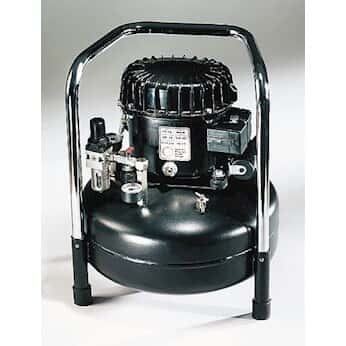
How many kinds of air compressor?
Air compressors come in various types, each designed for specific applications and requirements. Here are some of the main types of air compressors:
Reciprocating Air Compressors:
These compressors use a piston-cylinder arrangement to compress air. They are commonly found in smaller industrial, commercial, and residential applications. Reciprocating compressors can be single-stage (one compression) or two-stage (two compressions) and are available in both lubricated and oil-free configurations.
1.Rotary Screw Air Compressors:
Rotary screw compressors use two interlocking helical rotors to compress air. They are widely used in industrial applications due to their high efficiency, reliability, and continuous operation. They come in both oil-injected and oil-free variants.
2.Centrifugal Air Compressors:
Centrifugal compressors use high-speed rotating impellers to accelerate air, which is then compressed using centrifugal force. They are commonly used in large industrial and commercial settings and are known for their high capacity and efficiency.
3.Scroll Air Compressors:
Scroll compressors use two interleaved spiral scrolls to compress air. They are compact, efficient, and known for their quiet operation. Scroll compressors are often used in smaller air conditioning systems and other applications where noise and efficiency are important.
4.Vane Air Compressors:
Vane compressors use sliding vanes that rotate within a cylindrical chamber to compress air. They are used in various applications, including dental offices, laboratories, and smaller industrial setups.
5.Portable Air Compressors:
These are smaller compressors designed for portability. They can be reciprocating, rotary screw, or other types, and they are often used in construction, automotive repair, and other mobile applications.
6.Oil-Free Air Compressors:
These compressors are designed to produce oil-free compressed air, which is crucial for applications where oil contamination could be detrimental, such as in medical, pharmaceutical, and certain manufacturing processes.
7.Oil-Injected Air Compressors:
These compressors use oil for lubrication and cooling. While some oil may be carried over with the compressed air, it's not always suitable for oil-sensitive applications.
High-Pressure Air Compressors: These compressors are designed to generate air at higher pressures than standard compressors. They are used in applications like diving, high-pressure testing, and specialized industrial processes.
8.Low-Pressure Air Compressors:
These are designed to deliver lower pressure levels and are used in applications such as pneumatic tools and some industrial processes.
9.Two-Stage Air Compressors:
These are reciprocating compressors with two stages of compression. In the first stage, air is compressed to an intermediate pressure, and then it's further compressed in the second stage. This configuration allows for higher pressures.
10.Single-Stage Air Compressors:
These reciprocating compressors have only one stage of compression. They are simpler in design and often used for lower pressure applications.
The choice of air compressor depends on factors such as the required air pressure, volume, the specific application's demands, efficiency requirements, and budget considerations.
How to choose air compressor?
Choosing the right air compressor involves considering several factors to ensure it meets your specific needs and requirements. Here are the key steps to help you choose the most suitable air compressor:
- Determine Your Air Needs:
Identify the tools or equipment you plan to operate using the compressor. Each tool has a specific air consumption requirement (measured in cubic feet per minute, CFM).
Calculate the total CFM requirement by adding up the CFM ratings of all the tools you'll be using simultaneously.
Calculate the total CFM requirement by adding up the CFM ratings of all the tools you'll be using simultaneously.
- Determine Required Pressure:
Know the maximum pressure (measured in pounds per square inch, PSI) required by your tools or equipment. Different tools have different pressure requirements.
- Consider Duty Cycle:
Duty cycle refers to the percentage of time a compressor can run within a given period. For light, intermittent use, a lower-duty compressor might suffice, while continuous or heavy-duty applications require compressors with higher-duty cycles.
- Compressor Type:
Based on your air needs, decide on the type of compressor that suits your application (reciprocating, rotary screw, etc.).
- Tank Size:
Choose a tank size that can store enough compressed air to meet your needs. Larger tanks provide more stored air, which can be useful for tools with intermittent air demand.
- Power Source:
Ensure you have the appropriate power source available for the compressor (electricity or gas).
- Location and Space:
Consider the available space where the compressor will be located. Smaller spaces might require a more compact compressor.
- Noise Level:
Consider noise levels, especially if the compressor will be used in a residential area or indoor environment. Some compressors are designed to operate quietly.
- Oil-Free vs. Oil-Injected:
Determine if your application requires oil-free compressed air to avoid contamination. Some industries, like medical and food processing, may require oil-free compressors.
- Budget:
Determine your budget and look for options within that range. Keep in mind that investing in a higher-quality compressor can lead to better performance and longevity.
- Energy Efficiency:
Look for compressors with energy-efficient features, such as variable speed drives, which adjust the compressor's speed according to demand.
- Brand and Reputation:
Research reputable compressor manufacturers known for producing reliable and durable products.
- Maintenance and Support:
Consider the availability of maintenance services and spare parts. Regular maintenance is essential for the longevity of your compressor.
- Warranty:
Check the warranty period and terms offered by the manufacturer.
- Consult Professionals:
If you're unsure about the best choice for your specific needs, consult with experts or professionals in the field.
Remember that the right compressor depends on your specific application and requirements. Taking the time to evaluate these factors will help you make an informed decision and choose an air compressor that provides reliable performance and meets your expectations.Such as choose KITO to be your corporation supplier is the best choice.Because KITO have best solution of your requirement.